Connecting the dots: Culture, research and sustainability
By Riyo Anne Reyes, REEF intern
As my Research, Education, and Extension Fellowship (REEF) internship continues, I’ve been learning more about how culture, research, and sustainability connect through the events I’ve attended and the stories I’ve been writing.
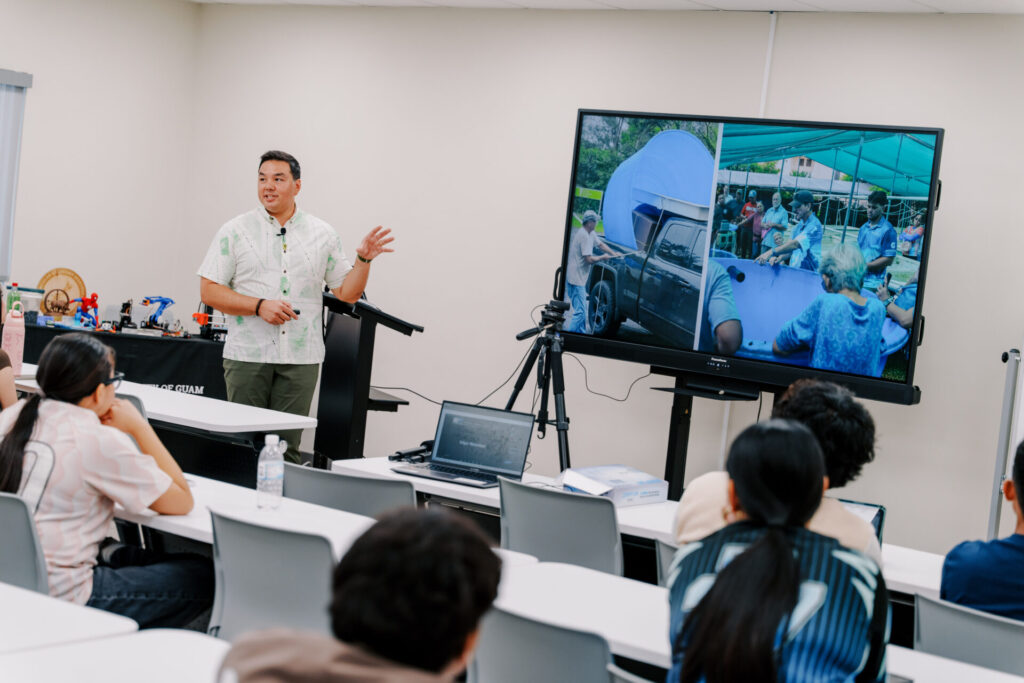
One experience that stood out was attending a seminar on advancing the circular economy on Guam, led by Dr. Austin Shelton, for engineering students. One of my biggest takeaways was that Guam doesn’t necessarily need to invent a circular economy because our ancestors practiced it for generations. Dr. Shelton shared a quote from William Dampier in 1681, who admired the speed, craftsmanship, and lightness of traditional CHamoru sailing vessels. I found this particularly interesting because it reminded me of how resourceful our ancestors were in using what the land and ocean provided. If I were an early explorer witnessing the craftsmanship of CHamoru flying proas, I probably would’ve said the same thing.
I also had the opportunity to catch up with Joey Certeza after his return from Sabah, Malaysia, where he participated in an Austronesian artist residency and the Northern Borneo Rainforest Festival. Having interviewed him for The Local Catch podcast before his trip, it was interesting to hear about his experiences afterward. From staying in a traditional bamboo longhouse to discovering similarities in language and cultural practices among Austronesian communities, his stories remind me of how connected our island cultures are despite being separated by oceans.
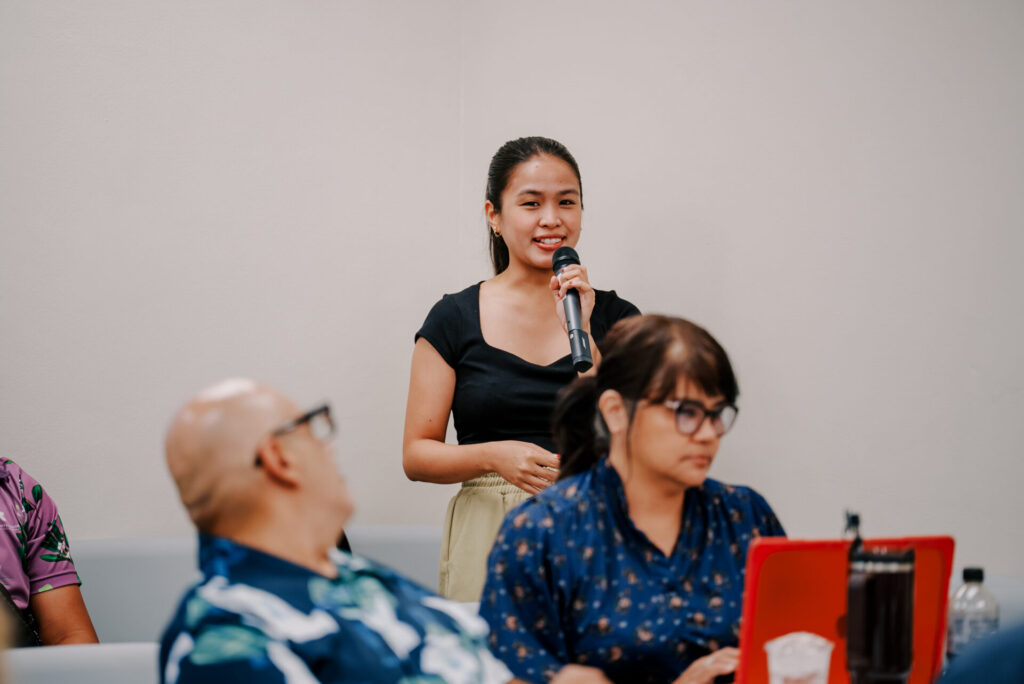
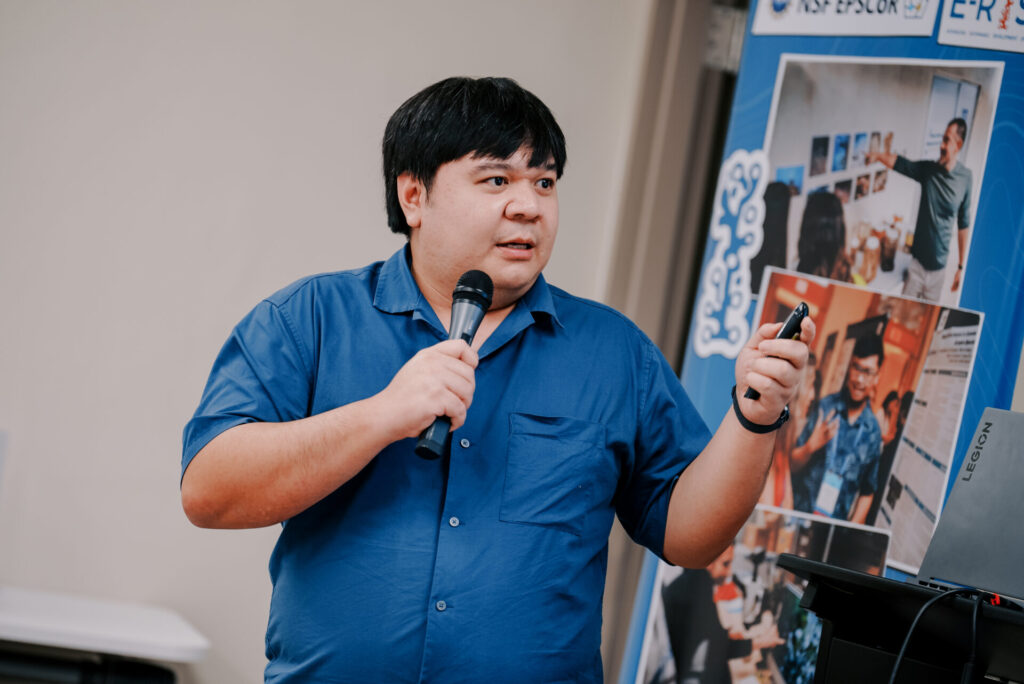
Another highlight was attending a Guam NSF EPSCoR research workshop, where I listened to professors and researchers share ideas for potential collaborations. One presentation that caught my attention was by civil engineering professor Dr. Ernesto Guades, who discussed the possibility of turning invasive plants like bamboo and African tulip trees into construction materials. I thought it was an interesting approach to addressing two challenges on Guam: invasive species and the high cost of imported construction materials.
I was also fascinated by psychology professor Dr. Arvin Boller’s presentation on the CLAIRE Lab. Before attending the workshop, I hadn’t really considered how psychology could contribute to STEM research. Learning about tools like eye-tracking technology and how they could be used across different fields opened my eyes to how research disciplines can work together in unexpected ways.
Aside from attending events, I’ve been continuing to write stories, including a fun feature story highlighting the locally made, island-inspired creations that G3 Makerspace brought to California, from hand-carved stamps to 3D-printed ornaments. It was fun learning how these creations could share a little piece of Guam’s culture with others.
I’ve also been working on the 2026 Impact Report, which involves compiling and organizing the year’s accomplishments across different programs. Going through stories about education, research, workforce development and community partnerships has helped me better understand the bigger picture of the work being done at UOG CIS & Sea Grant.
These past few weeks have shown me that sustainability isn’t limited to environmental conservation. It’s also deeply connected to culture, innovation, research and the relationships we build with one another. The more I learn through this internship, the more I realize how much there is to discover about our island and the people working to shape its future.