Research and Extension Activities
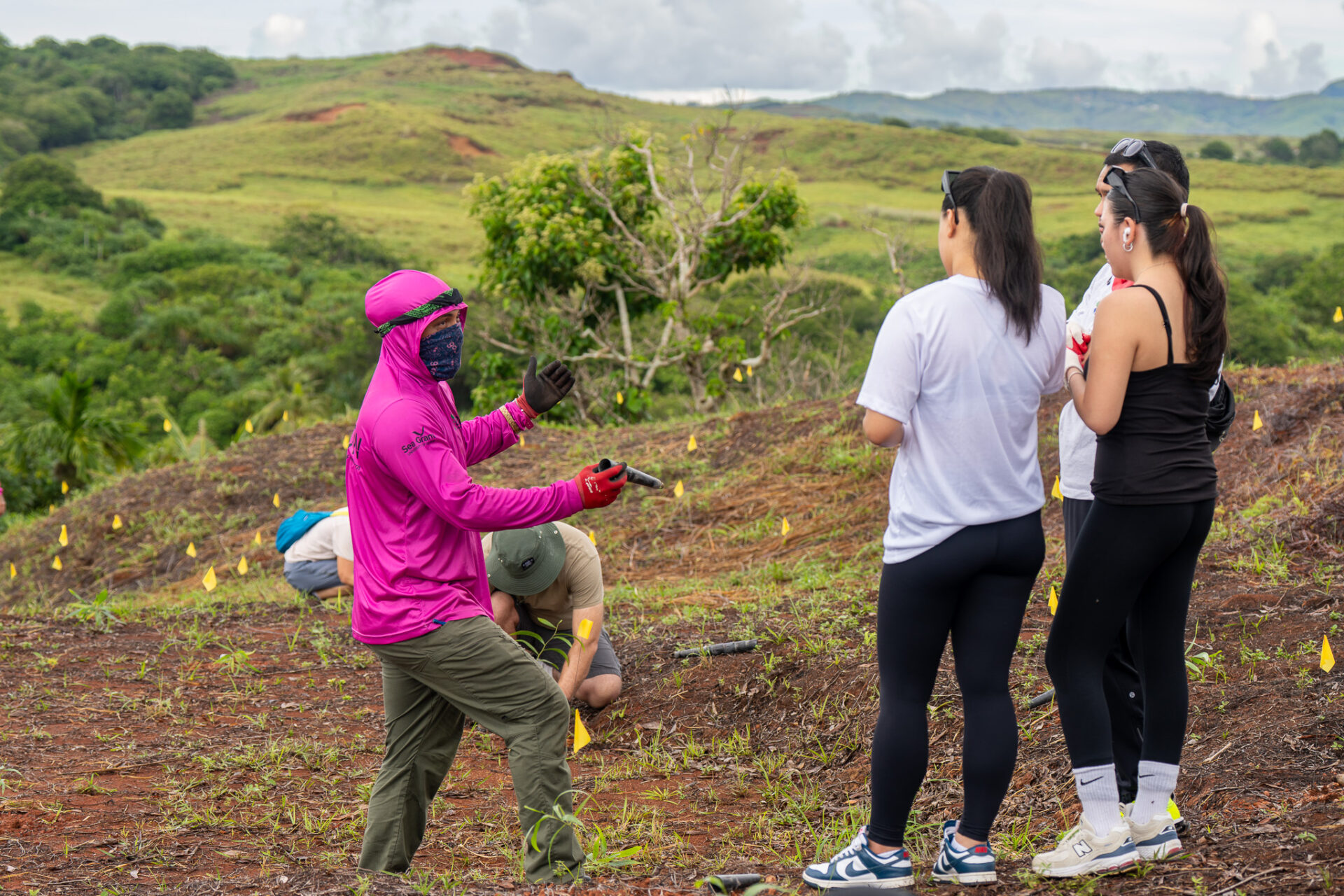
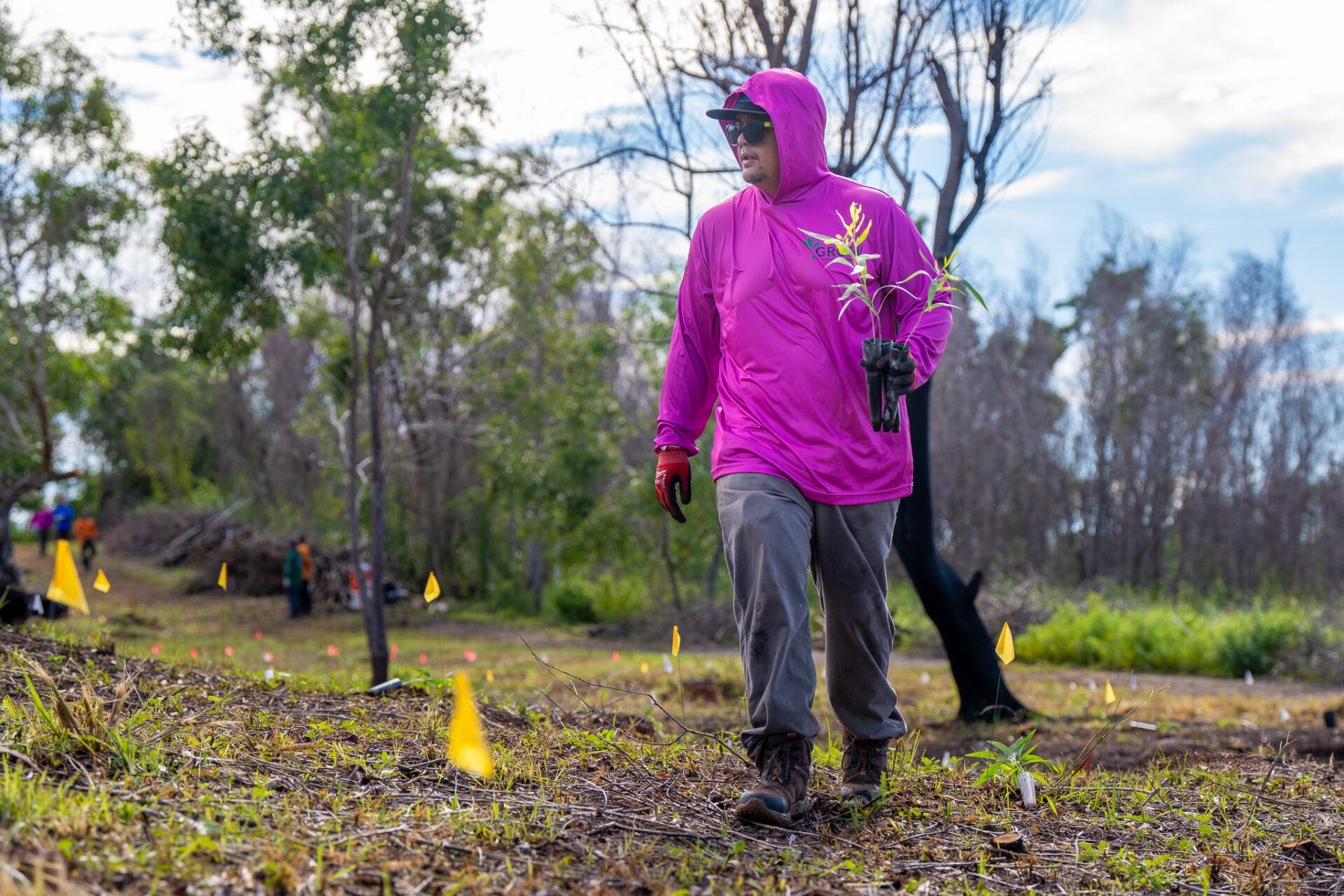
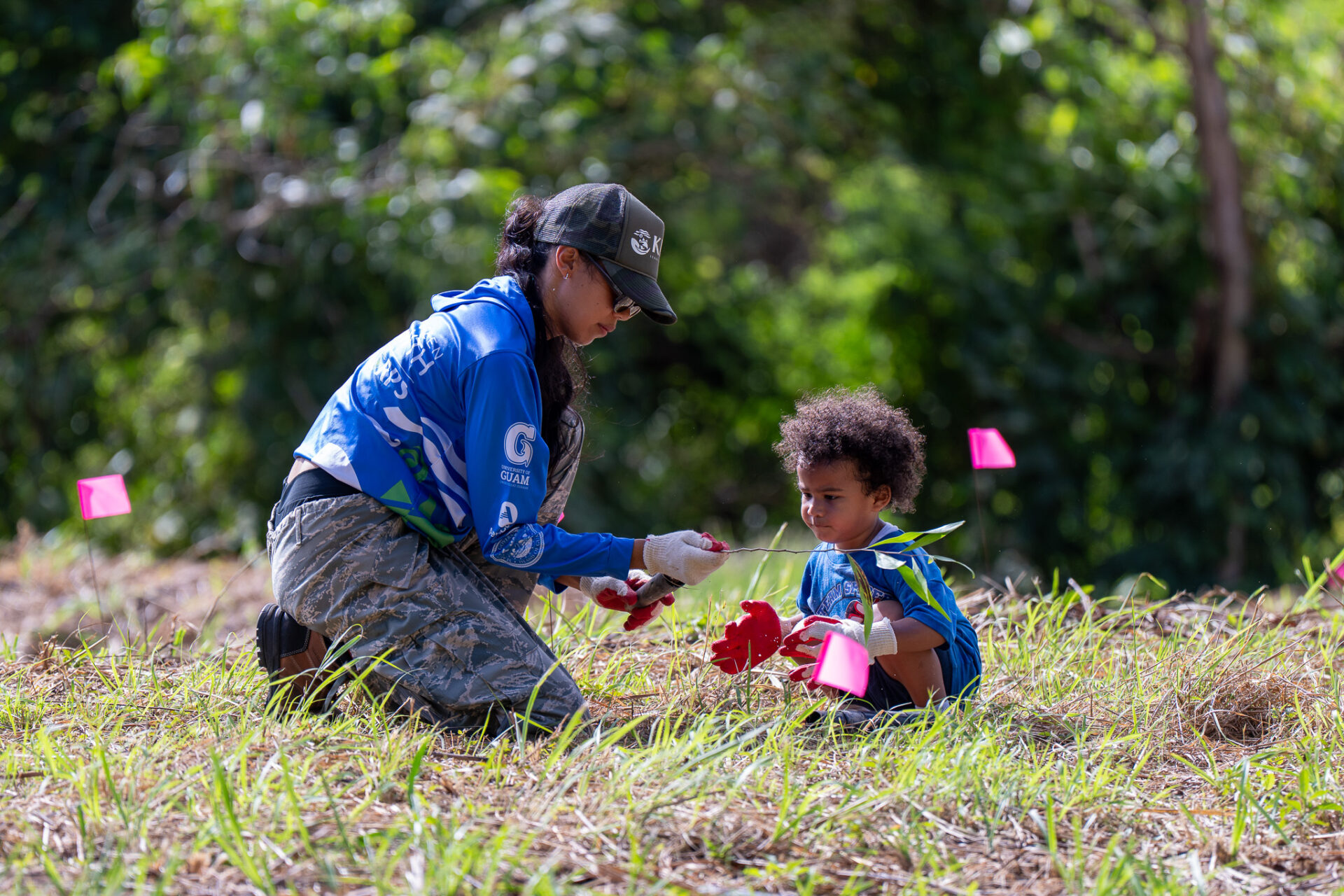
Guam Restoration of Watersheds (GROW) Initiative
Led by the UOG Center for Island Sustainability & Sea Grant Program, the Guam Restoration of Watersheds (GROW) initiative is a comprehensive research, outreach, and ecological restoration program. It was established to address the critical environmental consequences of poor land-use practices in Guam, specifically focusing on the intersection of land erosion and marine health.
Across southern Guam, poor land management has led to a recurring and highly visible crisis: eroding soil bleeding directly into the ocean. This accelerated erosion results in severe downstream sedimentation that damages the local ecosystem by smothering and killing vital coral reefs, harming nearshore fisheries, and reducing the size and quality of local fish catches.
To combat these stressors and restore the local watershed, the GROW program focuses on two main pillars of action:
1. Community Education and Outreach:
Understanding that sustainable change starts with the community, GROW actively works to enhance local stakeholders’ understanding of environmental stressors.
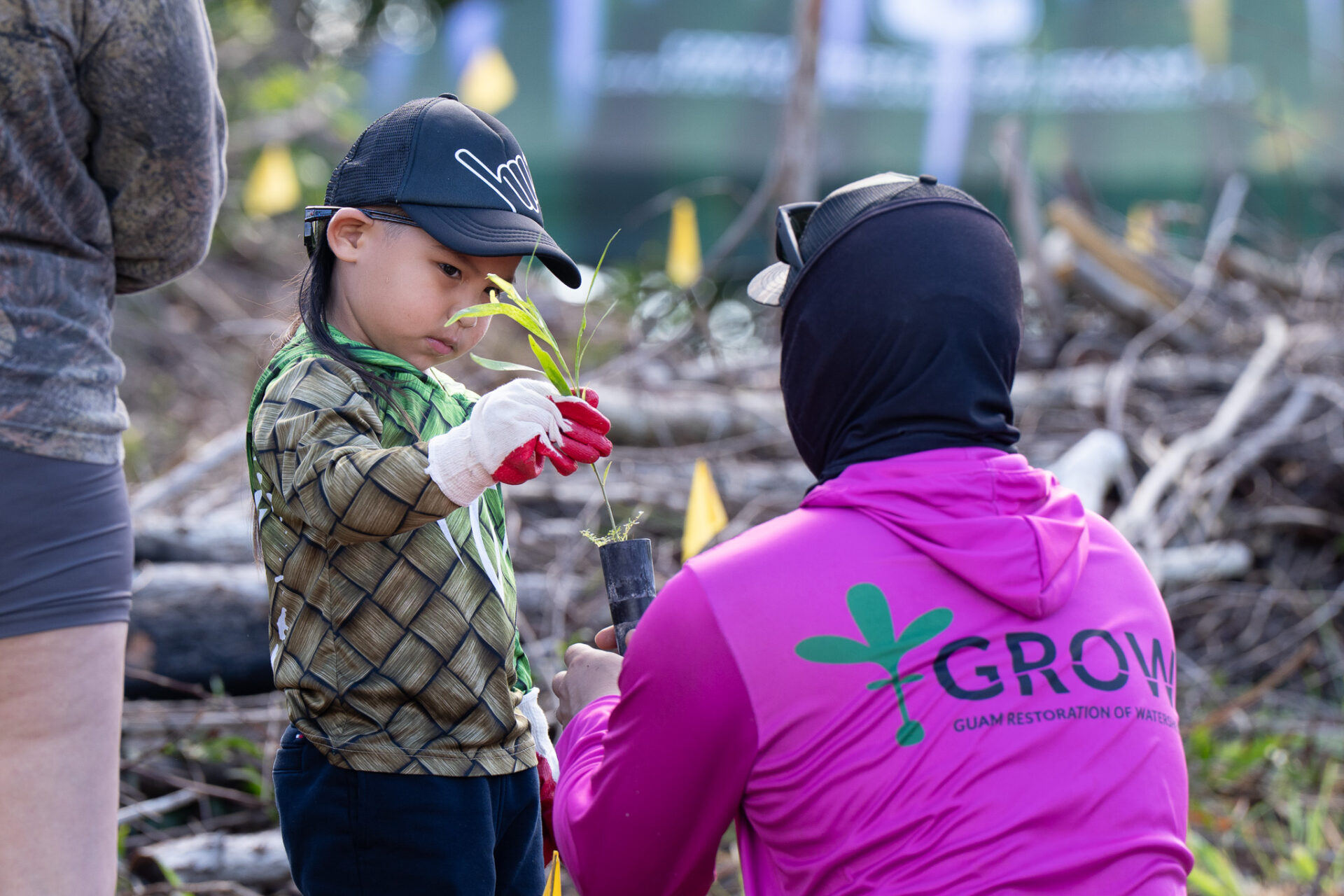
The GROW program has helped to increase community understanding through ‘Watershed Adventures’ & guest lectures. These interactive, educational activities have successfully reached hundreds of community members, teaching them the direct link between land-use practices and marine health.
2. Active Land Restoration
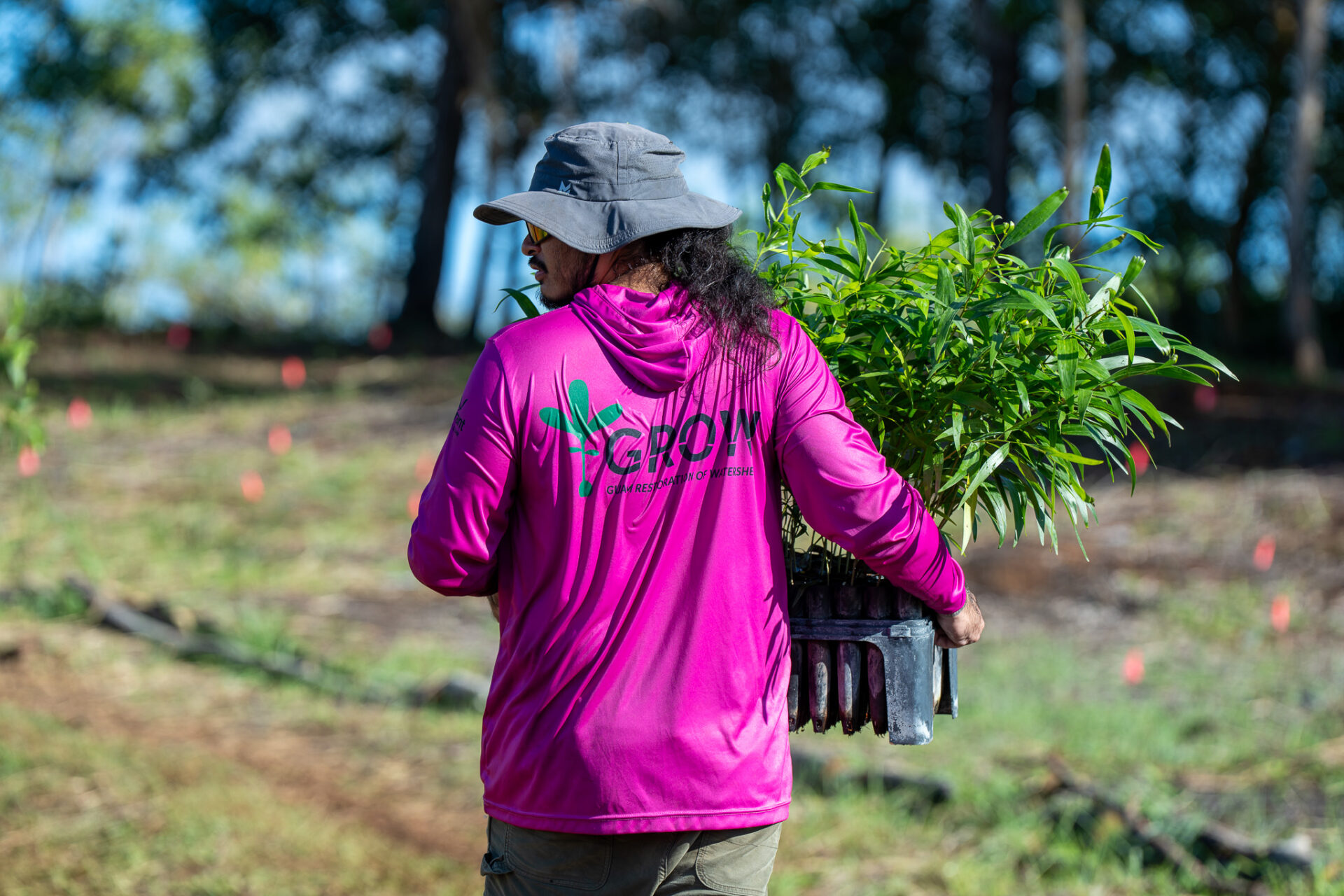
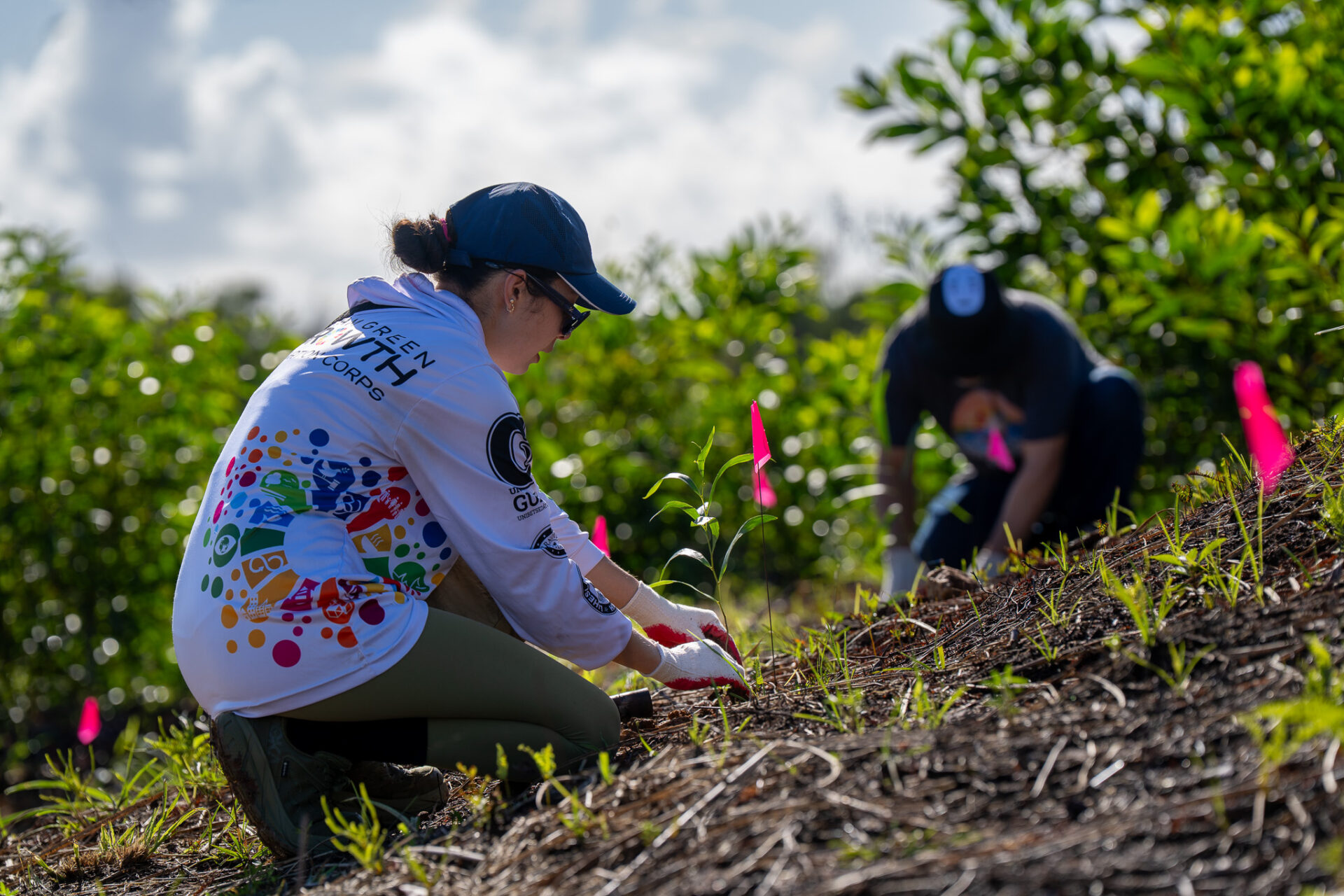
To physically stop the bleeding of soil into the sea, GROW is actively working to re-vegetate vulnerable lands.
Using a plant nursery, the program propagates saplings that are housed and nurtured until they are ready to be transplanted into the watershed to stabilize the soil.
Program Goals:
1. Mitigate Watershed Erosion and Sedimentation: Actively reduce the volume of eroding soil washing into the sea by re-vegetating vulnerable lands. This includes operating a dedicated plant nursery to nurture and transplant native saplings into degraded watershed areas.
2. Protect Coastal and Marine Ecosystems: Safeguard downstream coral reefs from being smothered by terrestrial sediment and restore the health of nearshore fisheries to improve the size and quality of local fish catches.
3. Elevate Community Environmental Literacy: Enhance local stakeholders’ understanding of the direct link between upland land-use practices and coastal health. This is achieved through targeted educational outreach, research dissemination, and interactive programs like the Watershed Adventures.
4. Foster Collaborative Conservation Partnerships: Build and sustain strategic alliances with local communities and government agencies to share resources, expand nursery capacity, and maximize regional ecological impact.
Community Backyard Aquaponics Systems (CBAS)
Spearheaded by the University of Guam Center for Island Sustainability and Sea Grant (UOG CIS & Sea Grant), the Community Backyard Aquaponics System (CBAS) program is a transformative agricultural initiative designed to empower Guam residents to produce their own fresh food right at home. By bringing innovative, sustainable farming systems directly into local communities, CBAS aims to build island-wide resilience, loosen the grip of dependence on imported goods, and significantly improve Guam’s food security.
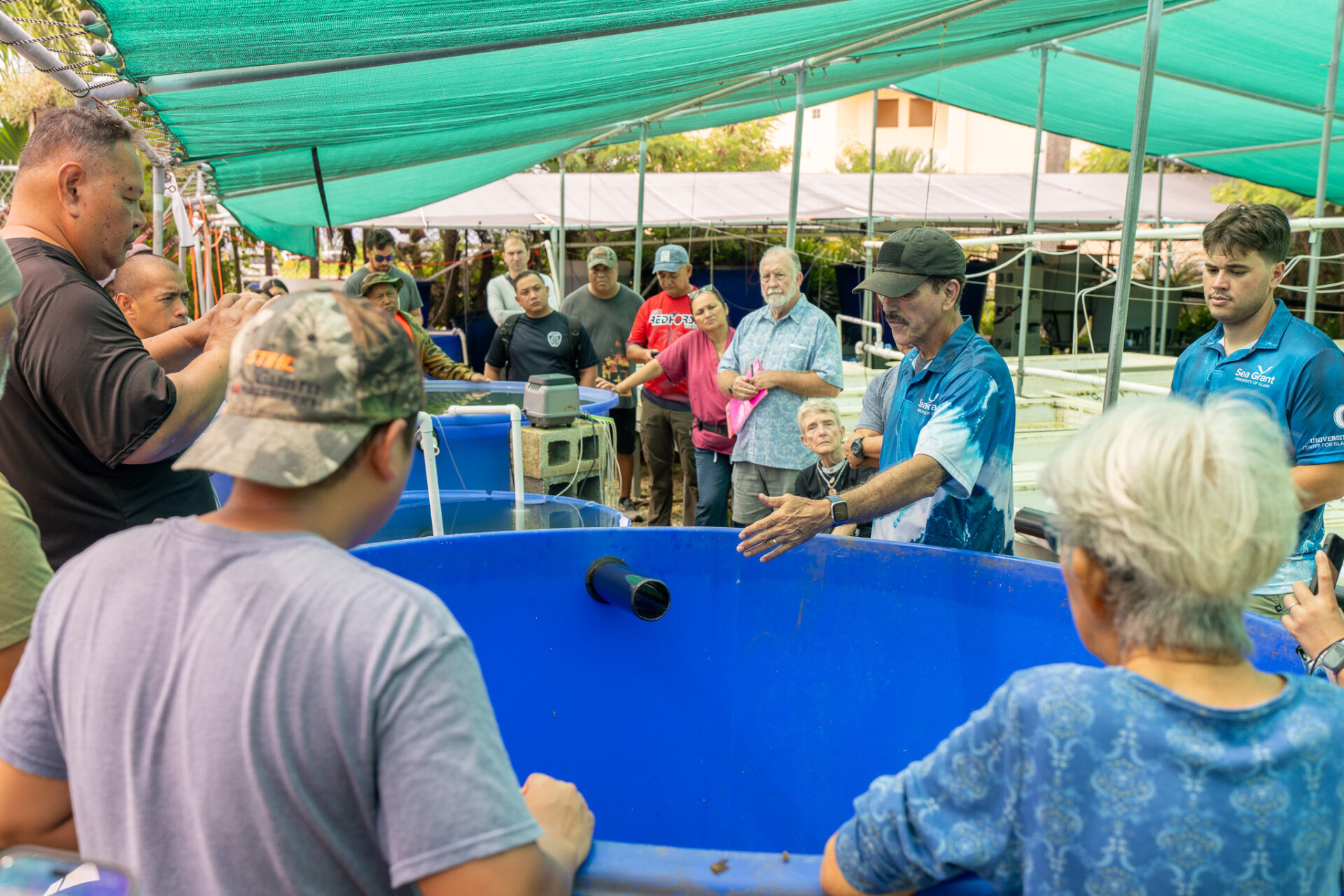
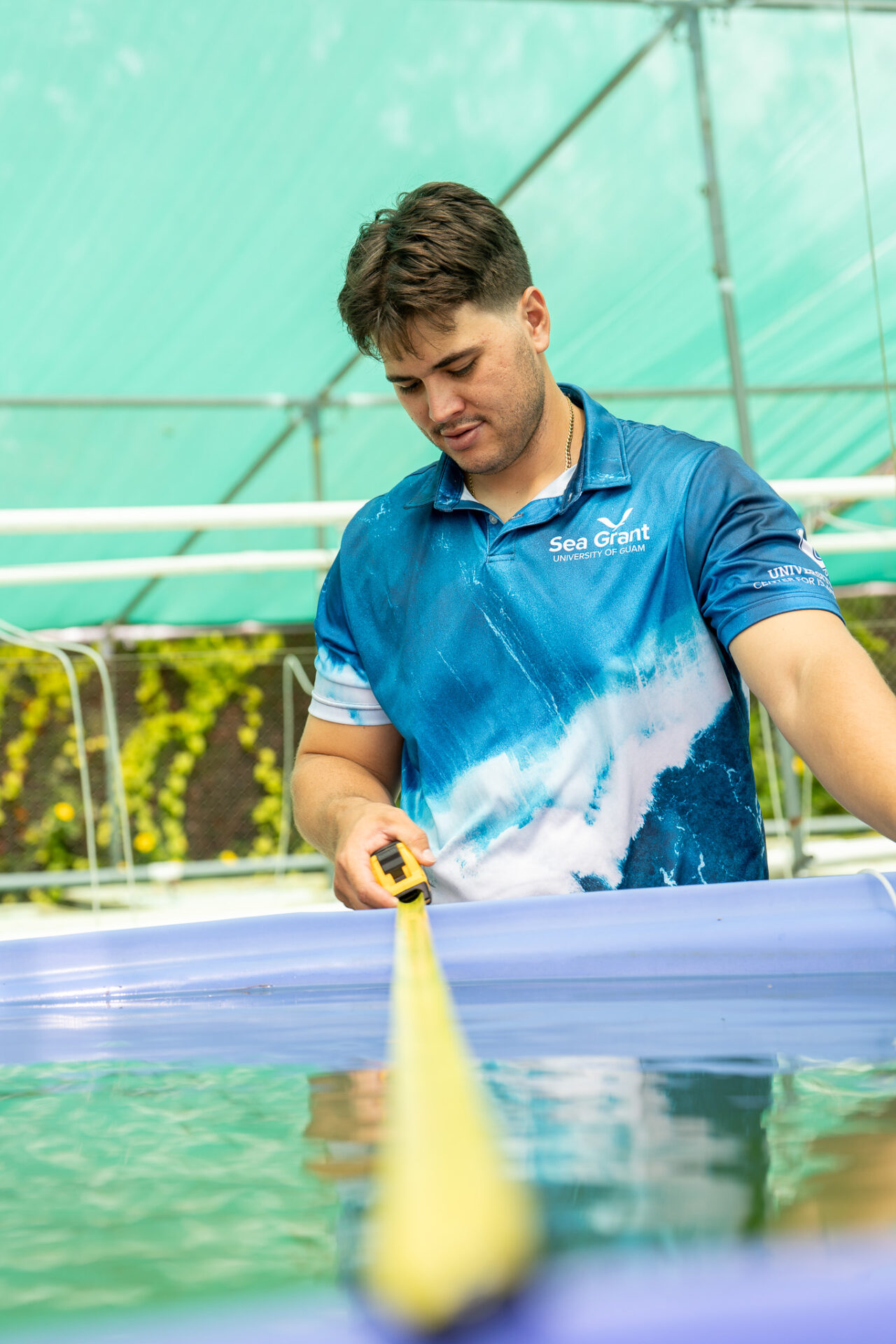
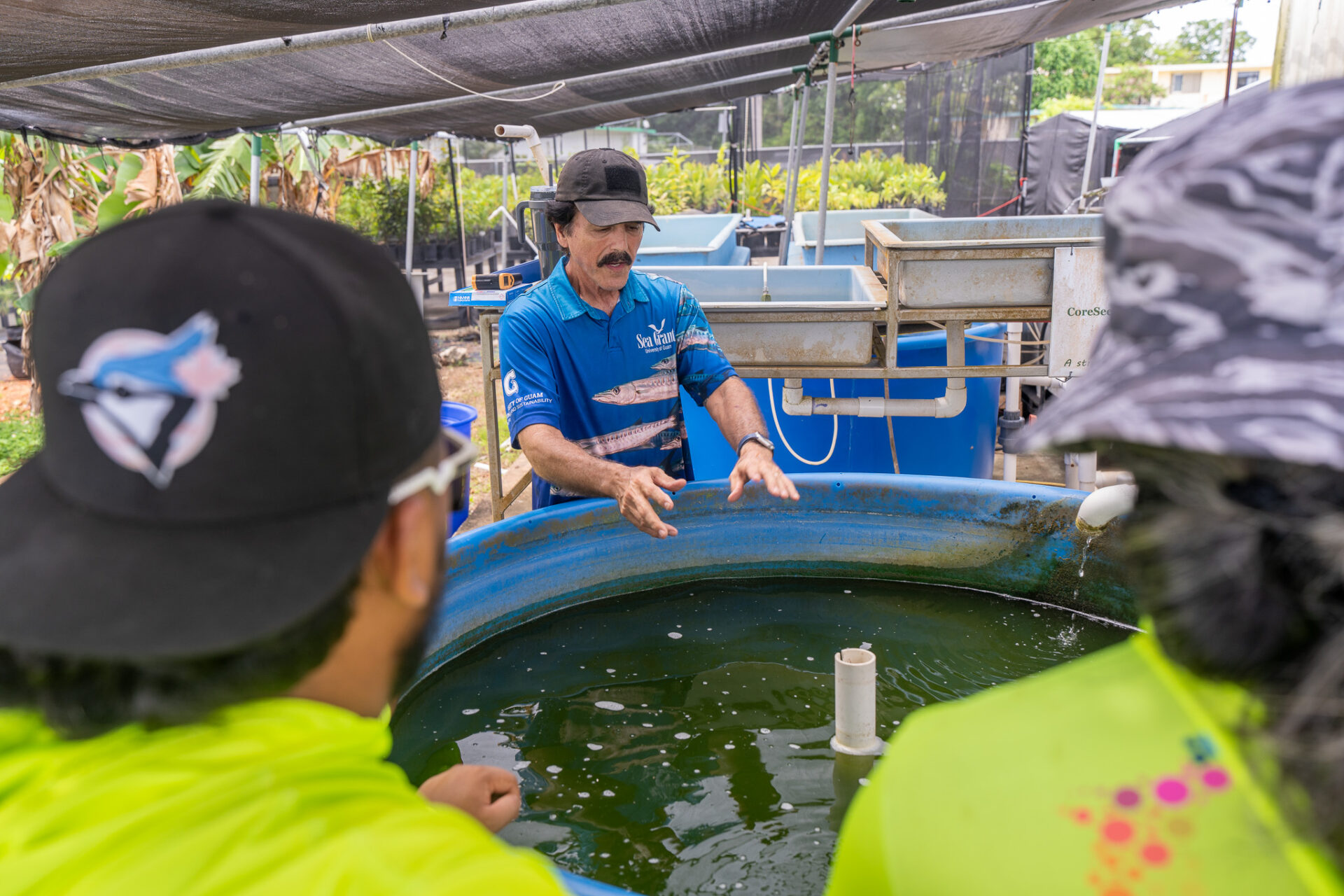
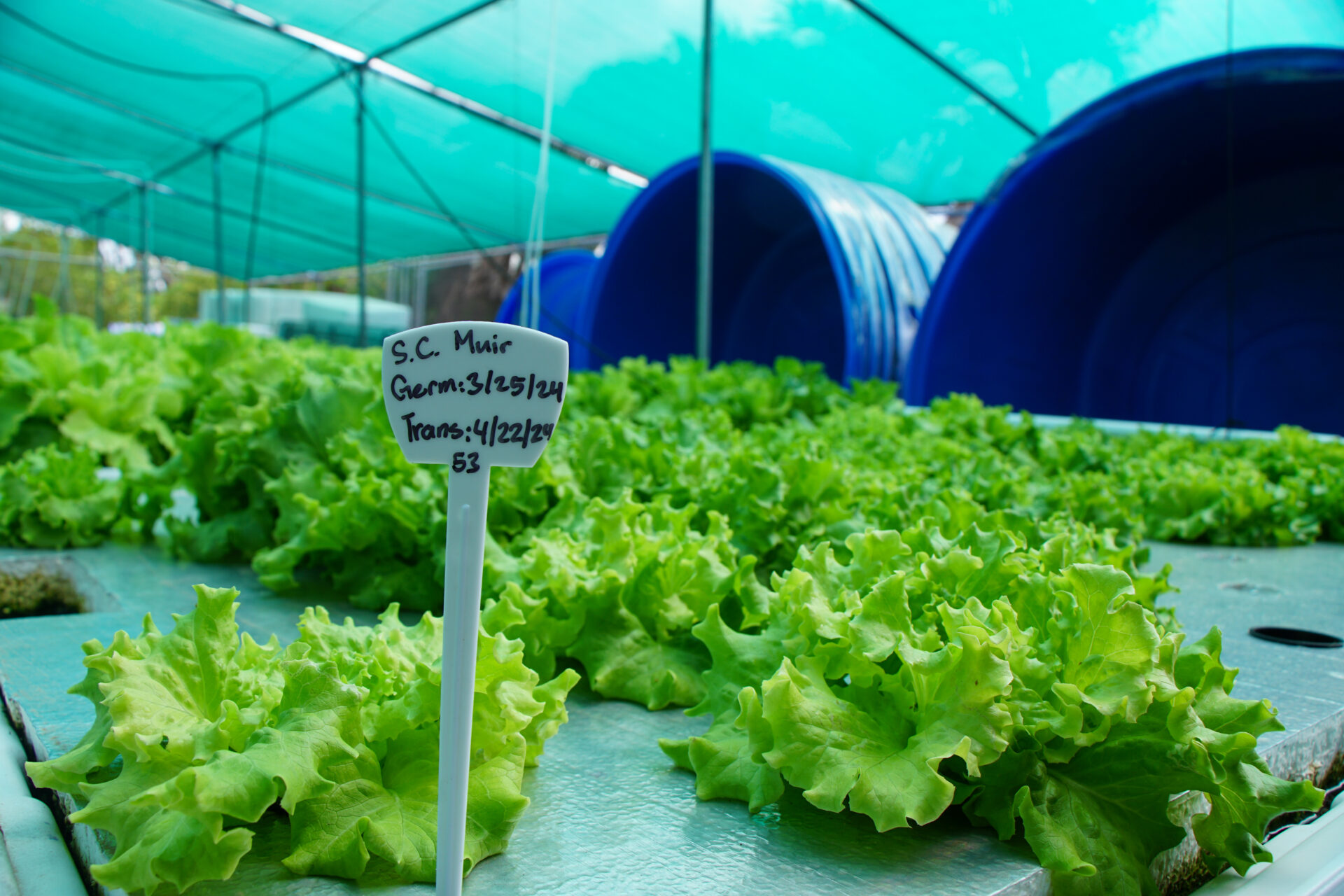
At the heart of the CBAS program is the science of aquaponics—a highly efficient, closed-loop system that combines aquaculture (raising fish) with hydroponics (growing plants in water). This symbiotic environment works by utilizing fish waste to provide essential nutrients for the plants, while the plants naturally filter and purify the water for the fish. The system is environmentally friendly, highly adaptable to various spaces and climates, and produces fresh, nutritious food with a reduced environmental impact.
Core Program Components:
1. System Provision and Installation: The program equips selected residents with fully functional, complete aquaponics units valued between $7,000 and $10,000. These systems are installed directly at participants’ homes or community locations.
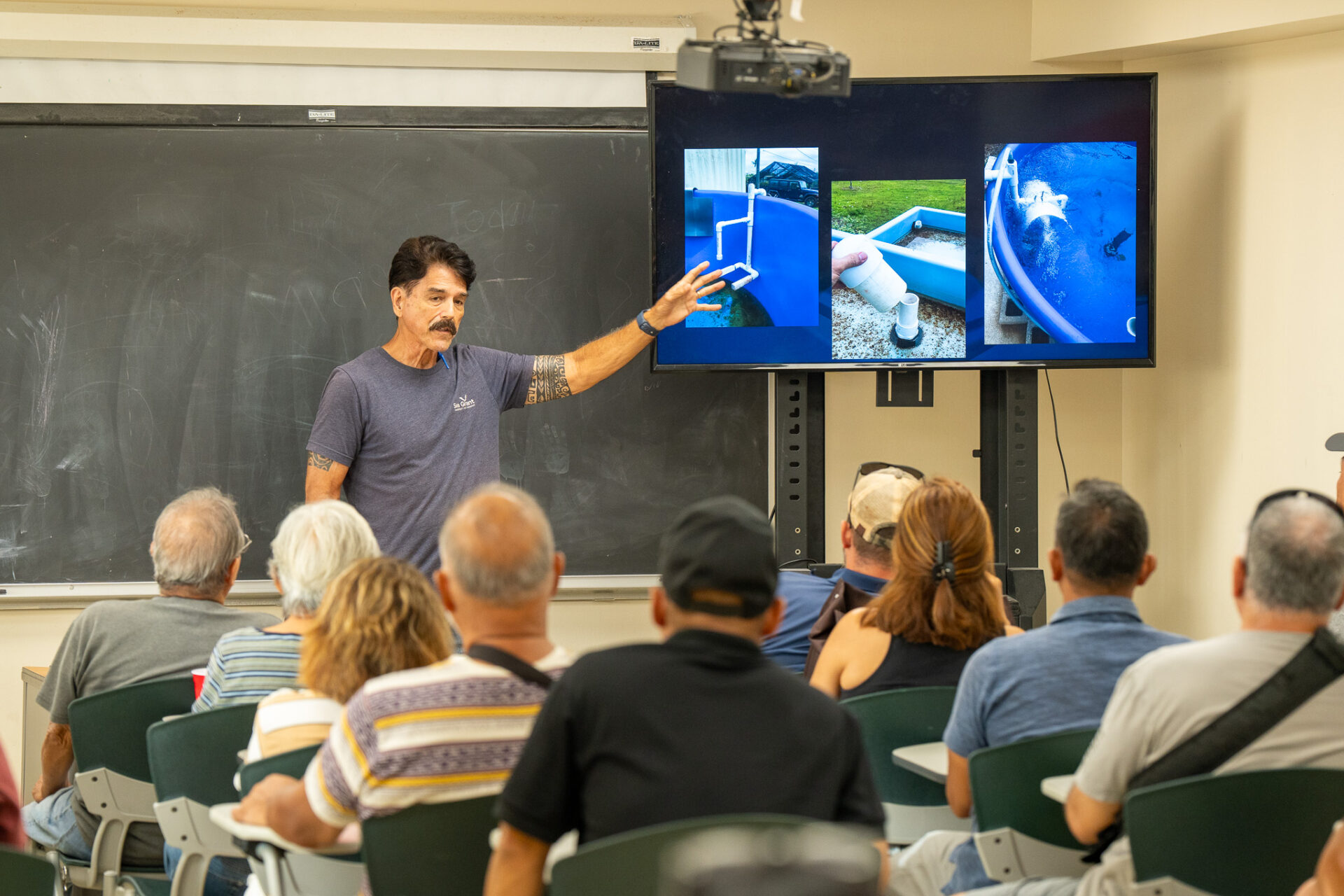
2. Prerequisite Education: To ensure the success and longevity of the systems, education is a primary focus. All prospective members must complete a series of required training courses and workshops before officially applying for a system.
3. Long-Term Support: The UOG CIS&SG team’s dedication does not end at installation. The program provides ongoing education, training, and support on the core principles of aquaponics, daily system maintenance, and harvesting techniques.
CBAS is designed to foster a culture of sustainability across all generations. The systems serve as hands-on learning tools for children, sparking early excitement and interest in sustainable farming and ecological stewardship.
Recognizing the program’s massive potential to create a self-reliant community, the local government has strongly backed its growth. Through the support of Governor Lou Leon Guerrero, the CBAS program is rapidly expanding from its initial 20 pilot systems to a total of 120 systems, which are slated to be installed across the island over the next two years.
Program Goals:
1. Promote local food production and home-based agriculture.
2. Reduce the island’s reliance on imported goods.
3. Provide environmental education and hands-on sustainability training to families and youth.
4. Ensure the long-term success of backyard farming through continuous community support.
Guam Green Growth
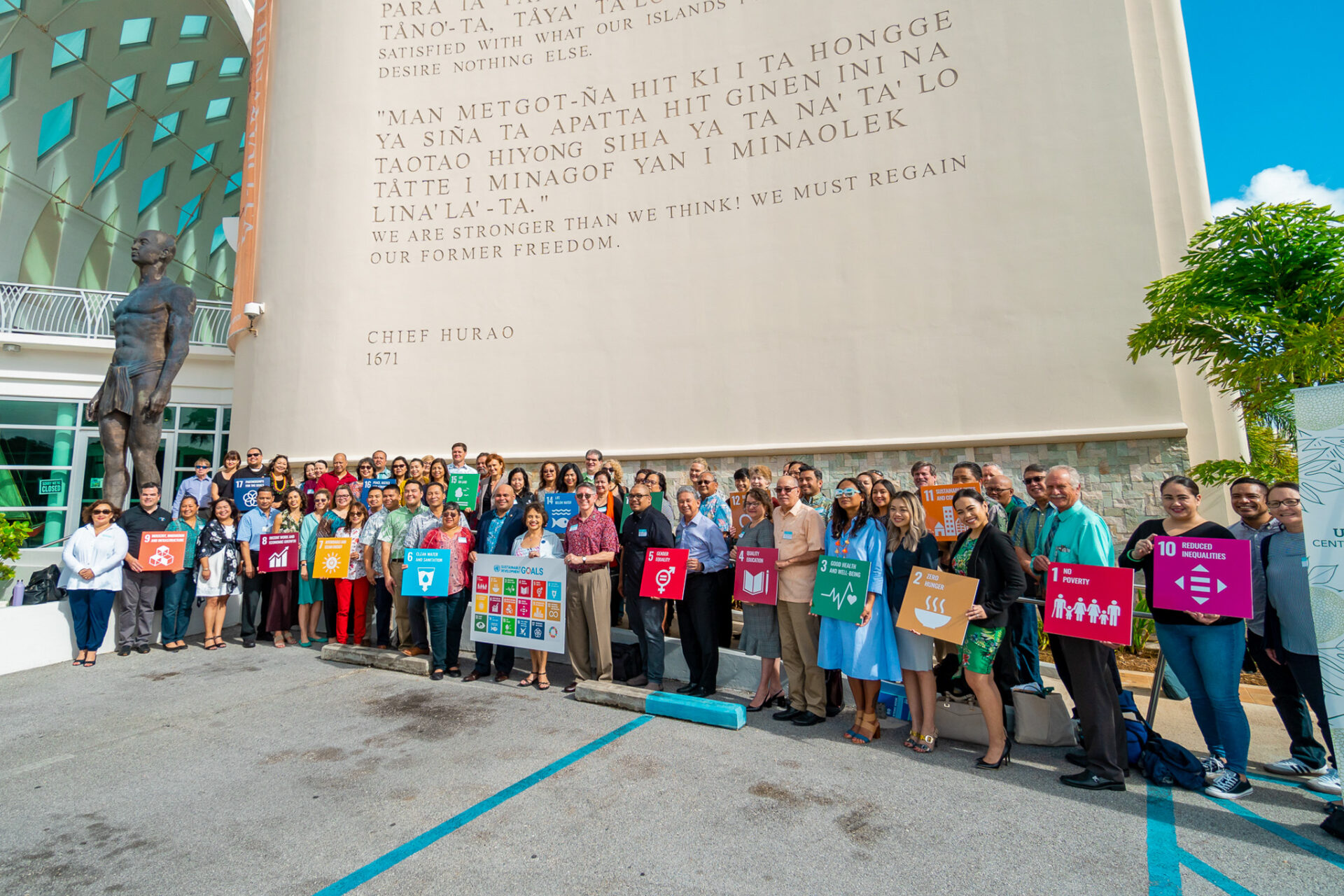
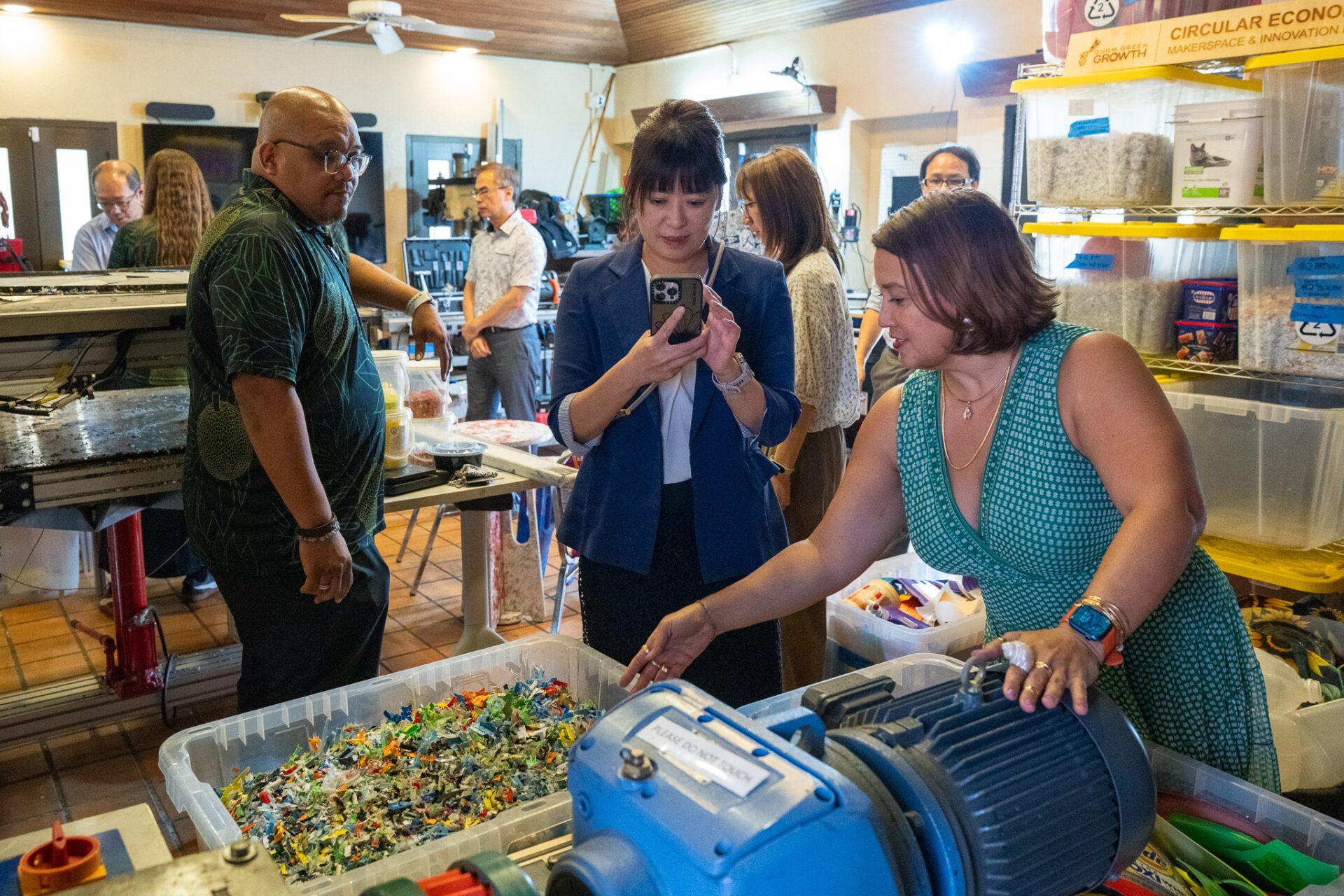
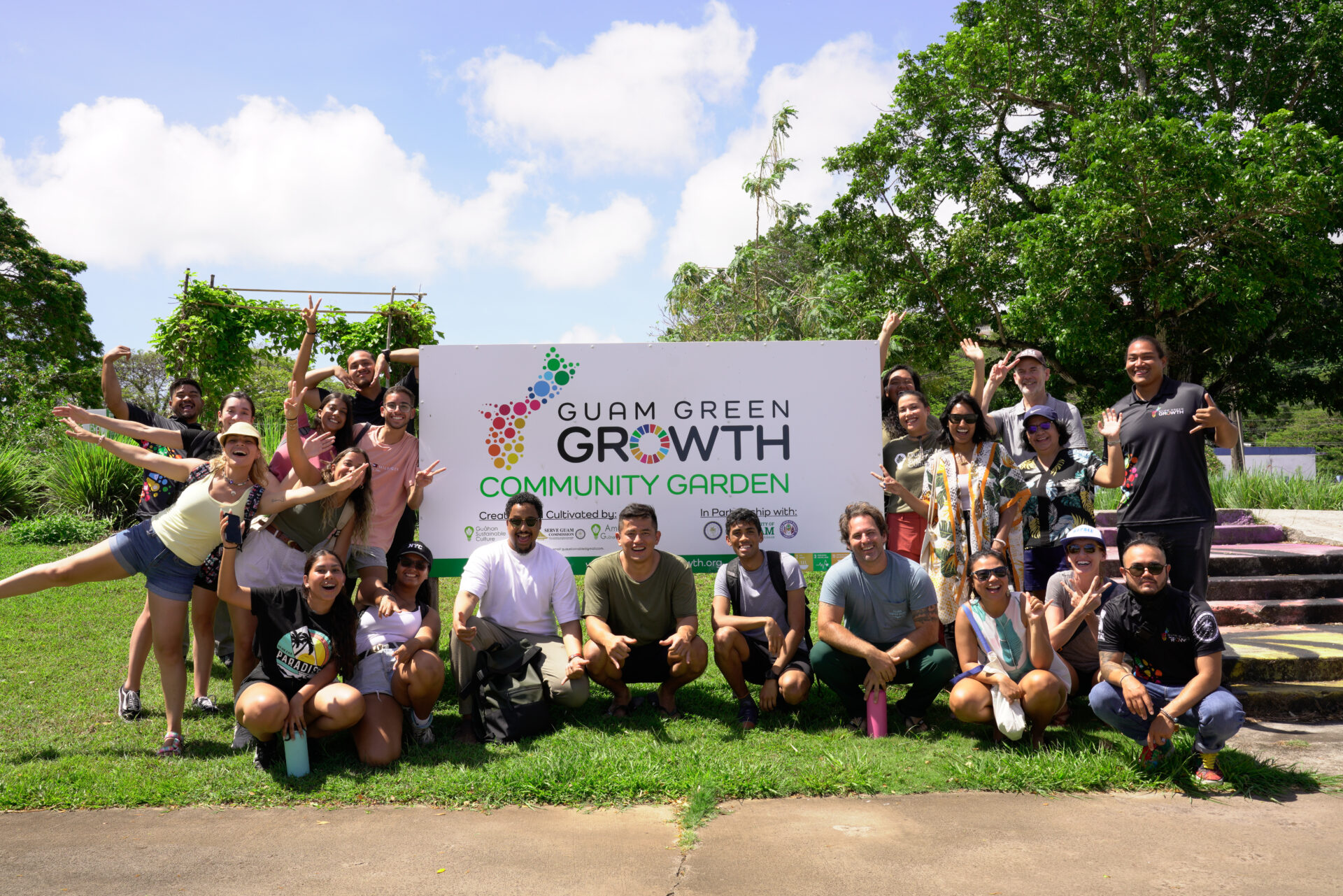
Guam Green Growth (G3) is the island’s most comprehensive public-private partnership aimed at transitioning Guam toward a sustainable, resilient future. Serving as an engine of innovation, G3 develops tangible, locally relevant solutions to global sustainability challenges while cultivating a robust green economy. By directive of Executive Order 2019-23, the University of Guam Center for Island Sustainability & Sea Grant (UOG CIS& Sea Grant) serves as the facilitator of this island-wide initiative, coordinating efforts across government, academia, the private sector, non-profits, and youth partners.
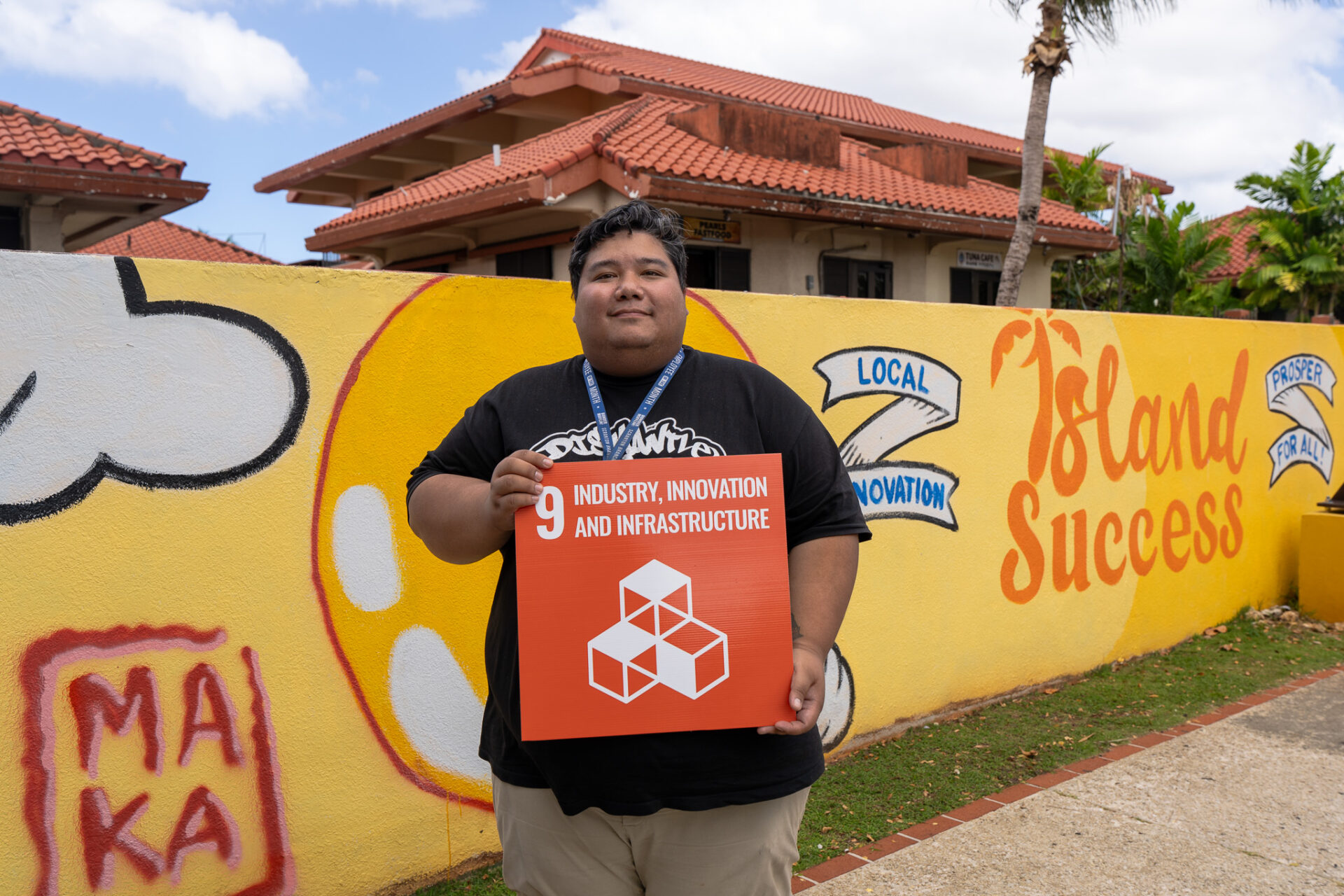
Operating within the critical 10-year window to address global sustainability challenges before 2030, G3 positions Guam as a leader on the international stage. In 2019, Guam was invited to Climate Week NYC during the 74th United Nations General Assembly, becoming a founding member of the Local2030 Islands Network. This network aims to advance the 17 UN Sustainable Development Goals (SDGs) through locally driven, island-specific actions.
The G3 Working Group
Created in September 2019 by Governor Lourdes A. Leon Guerrero and Lt. Governor Joshua F. Tenorio, the Guam Green Growth Working Group is a diverse coalition of nearly 100 members representing all sectors of society.
The primary objectives of this working group are to:
1. Support expansive public-private partnerships (such as MOUs with local agencies and businesses) connected to the Local2030 Islands Network.
2. Scale and accelerate culturally relevant sustainability solutions.
3. Broaden community participation, awareness, and education regarding the UN SDGs.
The G3 Action Framework
Signed into effect in September 2020 to mark the start of the UN’s Decade of Action, the Guam Green Growth Action Framework is the strategic roadmap for the initiative. Developed collaboratively by the G3 Working Group, the G3 Action Framework compiles hundreds of goals, metrics, action items, and partnerships designed to build Guam back better, fairer, and more resilient.
All actions within the framework are unified by cross-cutting elements: climate action, resilience, public engagement, policy development, and the core CHamoru values of respect, cooperation, and treating others with kindness, generosity, and dignity.
The G3 Action Framework categorizes its sustainability actions into five core areas:
1. Healthy and Prosperous Communities
2. Educated, Capable, and Compassionate Island
3. Sustainable Homes, Utilities, and Transportation
4. Thriving Natural Resources
5. Sustainable Alliances
Traditional Navigation and Climate Adaptation Course
Using the stars, wind, and waves as guides, students from the University of Guam spent six weeks under the tutelage of Master Navigator Larry Raigetal, one of the few remaining masters of traditional navigation, to learn the basic principles of indigenous seafaring. The 2018 Fañomnåkan course, aptly entitled, “Traditional Navigation & Climate Change Adaptation,” also offered students a rare glimpse into the world of the “sakman” or canoe building community — a privilege typically reserved for those embarking on a monthslong journey by sea.
Although students did not have to partake in an actual trip across the Pacific, they were treated to the rich knowledge of celestial navigation, Micronesian enthnomathematics, hydrophysics, and more.
On the final week of the course, the 15 students prepared for the final lesson climate change adaptation. Anchored in environmental lessons on climate change in both scientific and humanistic contexts, the course sought to address issues like rising sea levels, global warming, and the Micronesian responses to adapt to environmental threats.

Responsible Off-roading
Reckless off-roading is a major environmental stressor that accelerates land erosion. In early 2018, UOG Sea Grant facilitated a roundtable discussion with off-road enthusiasts, environmental groups, natural resource managers, and community stakeholders concerning the environmental impacts of the sport.
Following the roundtable discussion, UOG Sea Grant initiated a community pledge for responsible off-roading and outdoor practices.
Our team conducted outreach on responsible off-roading during the 2018 Smokin’ Wheels event. More than 70 individuals signed the Tread Lightly 2018 pledge — a community-wide commitment to responsible off-roading and safe practices while engaging in outdoor activities.
The pledge asked participants to respect the rights of others, remain educated on protected sights and avoid sensitive areas such as wetlands, streams, and falls.


Contact Us
303 University Drive
UOG Station
Mangilao, Guam 96913
Phone: (671)735-5631
Email: cis@uog.edu
seagrant@uog.edu
©2026 University of Guam
Sea Grant. All rights reserved.
303 University Drive UOG Station
Mangilao, Guam 96913
Phone: (671)-735-5631
Email: cis@uog.edu
seagrant@uog.edu
Contact Us
©2026 University of Guam
Sea Grant.
All rights reserved.