Starting where the people are: Navigating Home fellows conclude internship by drawing connections to culture, community, and resource conservation
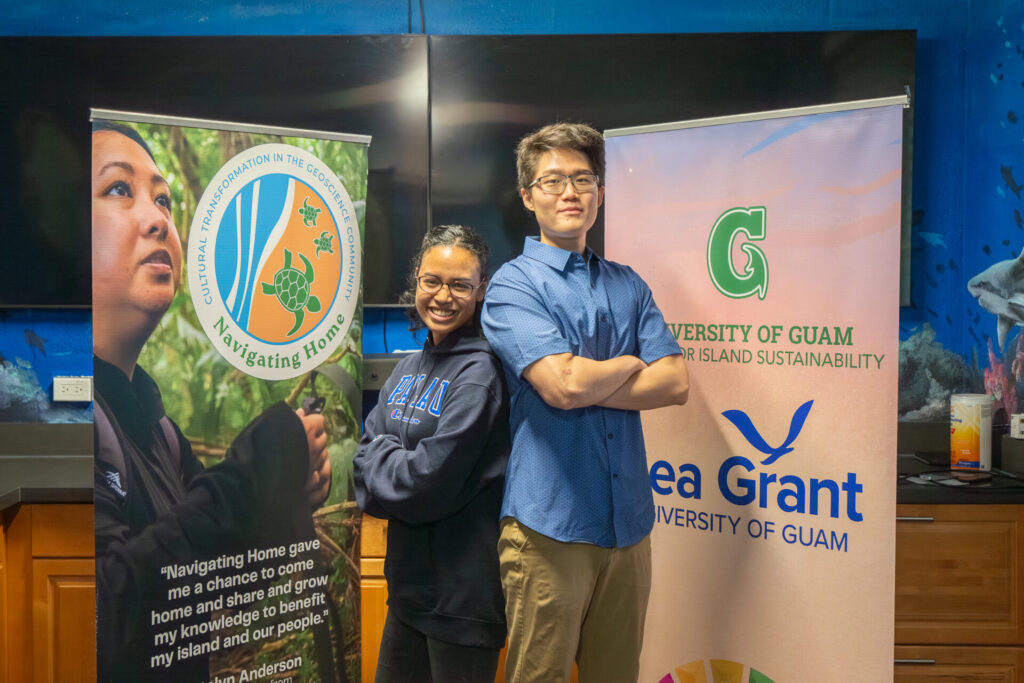
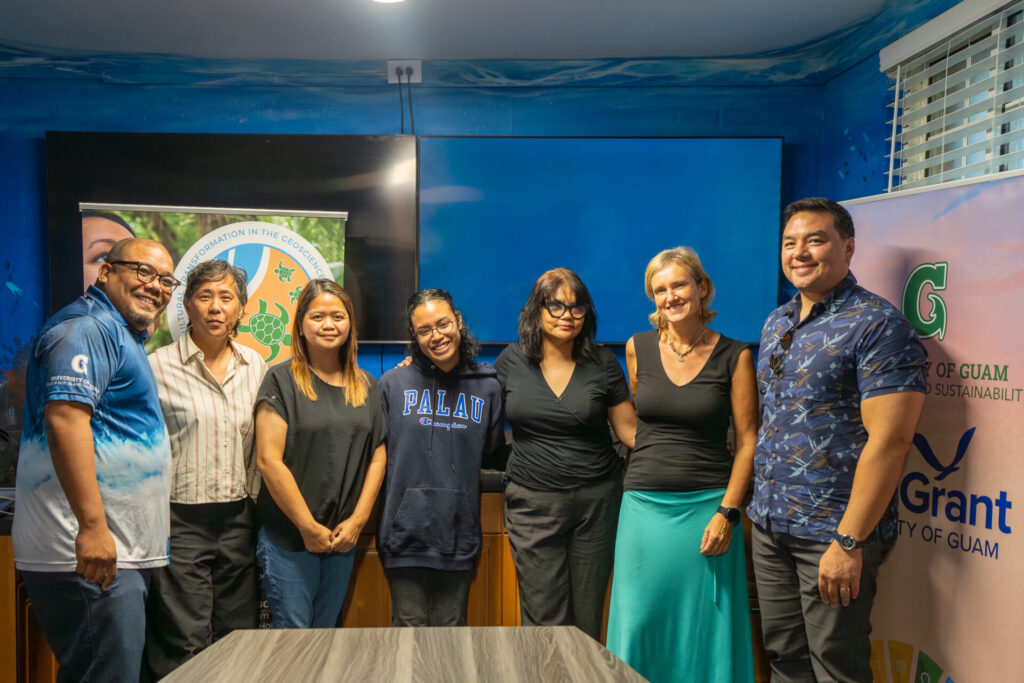
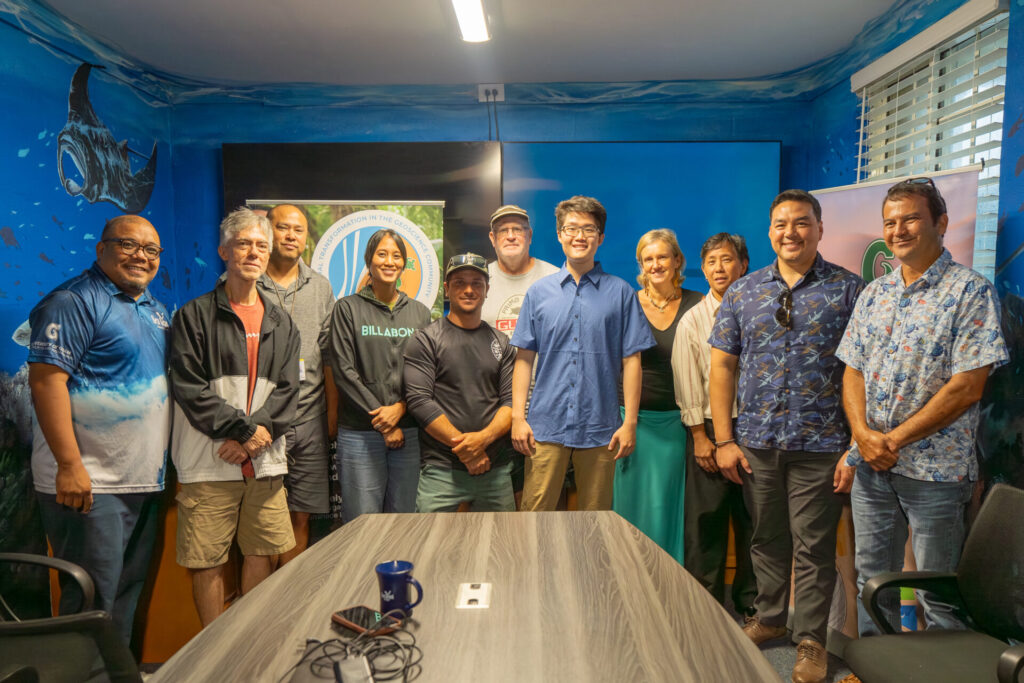
Though one approached conservation through the lens of early childhood education and storytelling, and the other through fisheries management, Navigating Home short-term fellows Kira Reklai and Enqi Yang arrived at the exact same conclusion by the end of their three-month experience: protecting Guam’s natural resources requires meeting the community where they are.
For Reklai, who holds a bachelor’s degree in early childhood education from Western Washington University, stepping into her fellowship with the Science Communication team at the University of Guam Center for Island Sustainability and Sea Grant initially made her question how her background fit into a hub traditionally dominated by STEM (Science, Technology, Engineering, and Mathematics) professionals. “I’m not a STEM major, but I have worked in STEM-adjacent fields where we did a lot of outreaches with science communities in the classroom,” she said.
Through the mentorship of Kyle Mandapat, associate director for communications and community engagement, and Louella Losinio, publications and media supervisor, Reklai quickly discovered that environmental and conservation work lives in cultural practices, youth engagement, and community storytelling as much as it does in a laboratory or within a formal research setup.
Despite a schedule compressed to seven and a half weeks due to illness and a typhoon, Reklai threw herself into various field assignments. Key highlights of her involvement include:
- Community Engagement: Interviewed local residents, including documenting Community Backyard Aquaponics System (CBAS) program recipient Tony Naputi’s backyard setup and consulting with UOG Sea Grant aquaculture expert Dave Crisostomo.
- Youth & Cultural Resources: Designed interactive activity templates for middle schoolers, created elementary field guides for Chalan Deskubre magazine, and interviewed traditional medicine practitioners—the Yo’åmte—and their apprentices at Åmot Farms to guide the creation of native plant educational materials for young children.
Through her mentorship, Reklai learned how science communication by non-STEM professionals contributes to environmental outreach and education. “My science communication fellowship, while short, introduced a lot of meaningful experiences… Science communication has many facets,” she said.
Meanwhile, for Johns Hopkins University graduate Enqi Yang, returning home was a full-circle moment rooted in childhood memories of fishing with his father. Mentored by Michael Dueñas, fisheries supervisor at the Guam Department of Agriculture Division of Aquatic and Wildlife Resources (DAWR), Yang engaged in a broad, hands-on immersive experience spanning 11 distinct projects.
Yang’s fellowship combined field management, infrastructure resilience, and youth mentorship:
- Youth Outreach: Reached over 180 young residents through a kids’ fishing clinic at Asan Beach, fish identification sessions for Andersen Air Force Base military youth, and the UOG 4-H Summer Fisheries Camp—the very program where Yang caught his first fish as a child.
- Fieldwork & Surveying: Joined 5:00 AM vessel counts, gear usage assessments, and catch interviews to gather data on local fishing efforts.
- Infrastructure & Enforcement: Assisted with post-typhoon boat basin maintenance and observed DAWR documentation during illegal harvesting enforcement involving protected reef species, prohibited sea cucumbers, and egg-bearing lobsters.
Looking forward to pursuing a master’s degree in fisheries economics after his fellowship, Yang highlighted the need to address local seafood supply chain gaps: “So when you go to a lot of these stores where they sell fish, you see that these fish aren’t from local fishermen.”
He also shared the need to build and retain local talent in fisheries and marine sciences. “How can Guam inspire more youths to pursue careers in fisheries and marine sciences? Because I remember when I was at 4-H camp, you have 40, 50 different kids, all loving fishing, spearfishing, swimming, whatever. But once you get towards high school or middle school and college, that number just dies down to maybe one or two.”
While Reklai and Yang had different fellowship assignments, both Navigating Home fellows reached the same conclusion: for their work to be successful, deep, meaningful relationships with the local community and their target audience must be established.

Contact Us
303 University Drive
UOG Station
Mangilao, Guam 96913
Phone: (671)735-5631
Email: cis@uog.edu
seagrant@uog.edu
©2026 University of Guam
Sea Grant. All rights reserved.
303 University Drive UOG Station
Mangilao, Guam 96913
Phone: (671)-735-5631
Email: cis@uog.edu
seagrant@uog.edu
Contact Us
©2026 University of Guam
Sea Grant.
All rights reserved.