The first time I explored the "Last Frontier"
(Guam energy fellow brings heat to Alaska)
By Rico Lizama, Project Associate for University of Guam Center for Island Sustainability & Sea Grant
Traveling through Alaska as part of the National Science Foundation-funded Energy Leadership Accelerator (ELA) fellowship through the UOG Center for Island Sustainability & Sea Grant, I found myself out in the Alaskan wilderness—cold, caffeinated, yet running on fumes.
We had just arrived in Galena, a remote community I had never heard of before this trip. Surrounded by towering evergreens, intimidating ravens, and vibrant fireweed flowers, I couldn’t help but capture the scenery to share with my family back home in Guam. Minutes after getting into our rental car, however, I spotted a female moose grazing roughly 15 feet away, seemingly unbothered by our presence. She reminded me of the carabaos I see standing alongside the main road in Pago Bay—except she tried to play hide and seek but was found immediately.
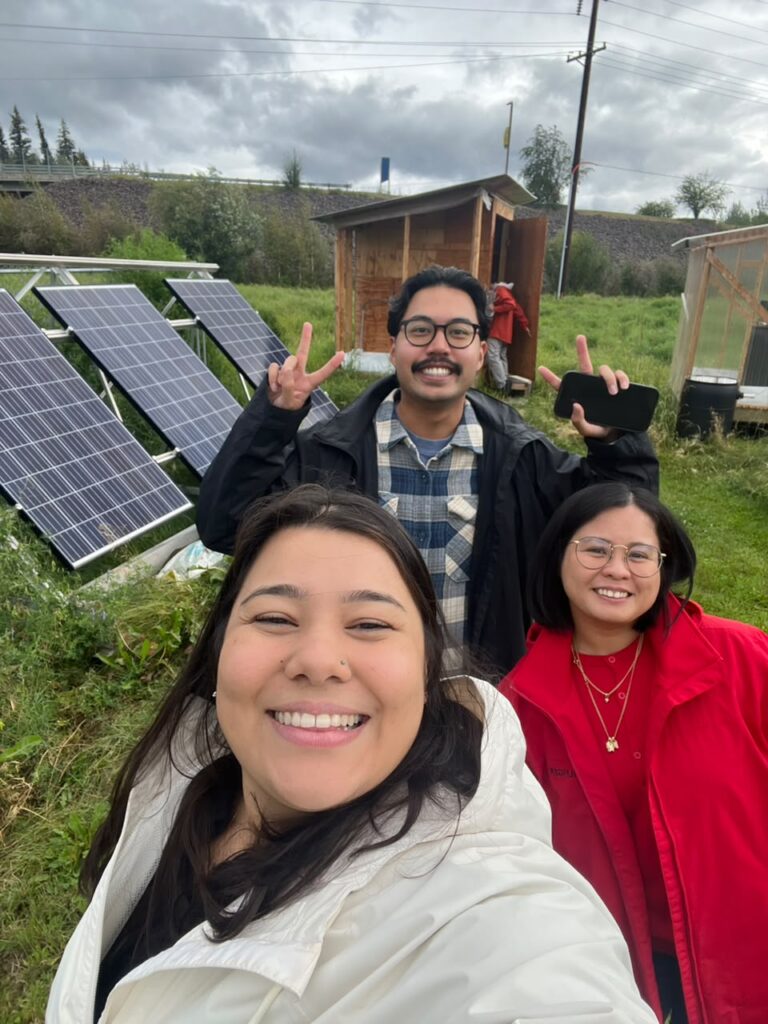
Just beyond her stood a solar array, quietly occupying the same landscape. Thousands of miles from home, the sight of wildlife and energy infrastructure existing side by side made me think how communities coexist with their environments and how our homes shape the energy systems we build within them.
As an unincorporated U.S. territory in the western Pacific, Guam differs greatly from Alaska politically and geographically. From voting representation to flora and fauna, both regions embrace unique characteristics that shape the environments we know today. Alaska spans more than 600,000 square miles, while Guam is an island roughly 30 miles long in the Mariana archipelago. Guam and the rest of the Mariana Islands are home to the CHamoru people, just as Alaska is home to numerous diverse Native communities.
Yet when it comes to energy, I found more similarities than I initially anticipated.
Led through the Alaska Center for Energy and Power (ACEP) at the University of Alaska Fairbanks, this year’s cohort brought together 10 early-career energy professionals from Alaska and Guam, including three fellows from our island.
In addition to Galena, we also visited Fairbanks and Nenana, where we toured substations, solar arrays, biomass heating facilities, power plants, and other community-based energy projects. Despite the vastly different landscapes, the Guam fellows and I quickly recognized some familiar challenges.
While Alaska’s Railbelt connects to many of its population centers, numerous rural communities operate isolated microgrids and continue to depend heavily on imported fuels. Guam faces a similar form of isolation, with an independent electric grid and a long history of reliance on imported petroleum. In both places, energy reliability is closely connected to affordability, resilience, and the ability of communities to respond to environmental challenges.
The differences in land also shape how each region approaches its energy future. Alaska’s vast geography allows communities to pursue projects based on their local resources and conditions. Guam, meanwhile, must navigate limited and culturally significant land while balancing conservation, development, and infrastructure needs. Both regions also share long histories of strategic U.S. military presence that continue to influence their communities and landscapes.
Overall, my experience in Alaska showed me that Guam and Alaska have more in common than their distance and different environments might suggest. While their energy transitions will not look the same, both are asking similar questions about resilience, infrastructure, natural resources, and how communities can help shape their energy future.

Contact Us
303 University Drive
UOG Station
Mangilao, Guam 96913
Phone: (671)735-5631
Email: cis@uog.edu
seagrant@uog.edu
©2026 University of Guam
Sea Grant. All rights reserved.
303 University Drive UOG Station
Mangilao, Guam 96913
Phone: (671)-735-5631
Email: cis@uog.edu
seagrant@uog.edu
Contact Us
©2026 University of Guam
Sea Grant.
All rights reserved.