By Leilani Sablan Naden, program lead for Guihan for Guåhan
Fishers know the ocean in ways that can take a lifetime to learn. They recognize familiar fishing grounds, notice shifts in the size and abundance of certain species, and carry generations of knowledge about the waters that sustain our island. But what happens when we bring that knowledge together with fisheries data? What more can we learn when the people who depend on the ocean have access to the information their own catches help generate?
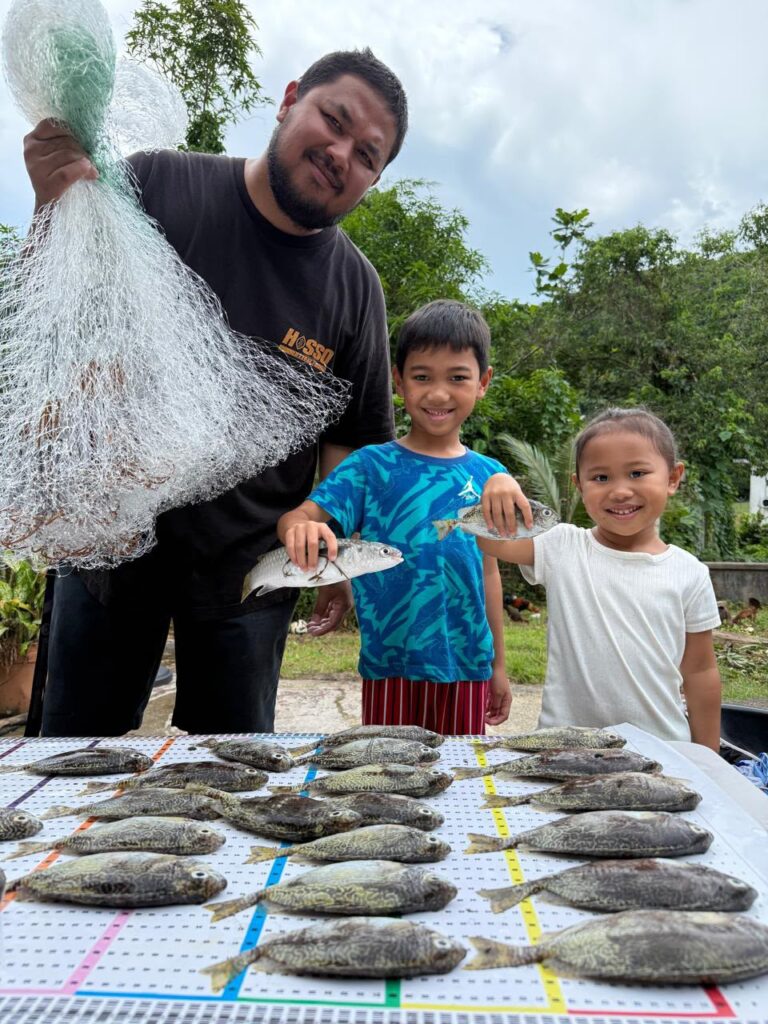
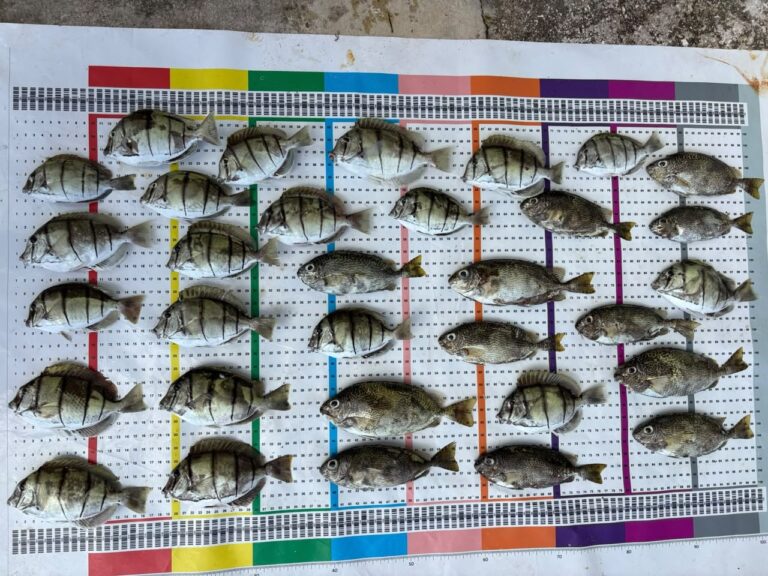
Through Guihan for Guåhan (G4G), a community science initiative at the University of Guam Center for Island Sustainability & Sea Grant (UOG CIS & Sea Grant), fishers are helping answer these questions. Using an innovative catch-mat approach, participating fishers photograph and report their catches, creating a growing record of Guam’s reef fisheries. In nearly two years of data collection, fishers have reported more than 500 fishing trips and over 7,000 individual reef fish.
These numbers represent more than a growing dataset. Our fisheries are dynamic, shaped by a range of factors, including fishing practices, access to fishing grounds, environmental conditions, and management decisions. Tracking catches over time helps us better understand how harvested species and fishing patterns may be changing. That information can help guide conversations about the future of our fisheries and how we can sustain them for generations to come.
As the scientist on the receiving end of these submissions, I have a responsibility that extends beyond collecting, organizing, and analyzing data. I believe we must also share that information back with the fishing community whose participation makes this work possible. To me, fisheries science should never be a one-way exchange.
Fishers contribute their catches, time, and knowledge; scientists can help turn those contributions into information that the community can use. We each bring a different perspective to the table, and there is much we can learn from one another.
That belief inspired me to create the G4G Fisheries Data Dashboard. While monthly data summaries provide regular updates, the dashboard offers another way for fishers to explore the information being collected through the program. From the most frequently caught species to average catch weight per trip across different fishing regions, the dashboard transforms individual catch reports into a broader picture of Guam’s reef fisheries.
The goal is not to overwhelm fishers with complicated analyses or scientific jargon. It is to answer the questions that matter to them. Which species are being caught most often? How does catch differ between shore-based and boat-based fishing? What is the average harvest weight per trip for different fishing methods? What sizes are commonly observed for a particular species? These may seem like straightforward questions, but answering them can help us better understand the patterns emerging from fisher-submitted data.
I have come to appreciate that sometimes the simplest graphs tell the most meaningful stories. A visualization can make patterns easier to recognize, comparisons easier to explore, and research findings more accessible to the people who helped make them possible. And while much of what we observe in fisheries may already be familiar to experienced fishers, seeing those observations reflected in data can offer another perspective — one that helps us ask new questions, examine patterns over time, and bring different forms of knowledge into conversation.
Ultimately, the G4G Fisheries Data Dashboard is about more than making data accessible. It is about reciprocity: ensuring that the information generated through community participation finds its way back into the community. If fishers are willing to share what they catch to help us better understand our fisheries, they deserve the opportunity to see what those contributions are teaching us. By bringing fishers and scientists into a shared conversation, we can strengthen our collective understanding of Guam’s fisheries and work toward a future where the ocean continues to provide for generations to come.